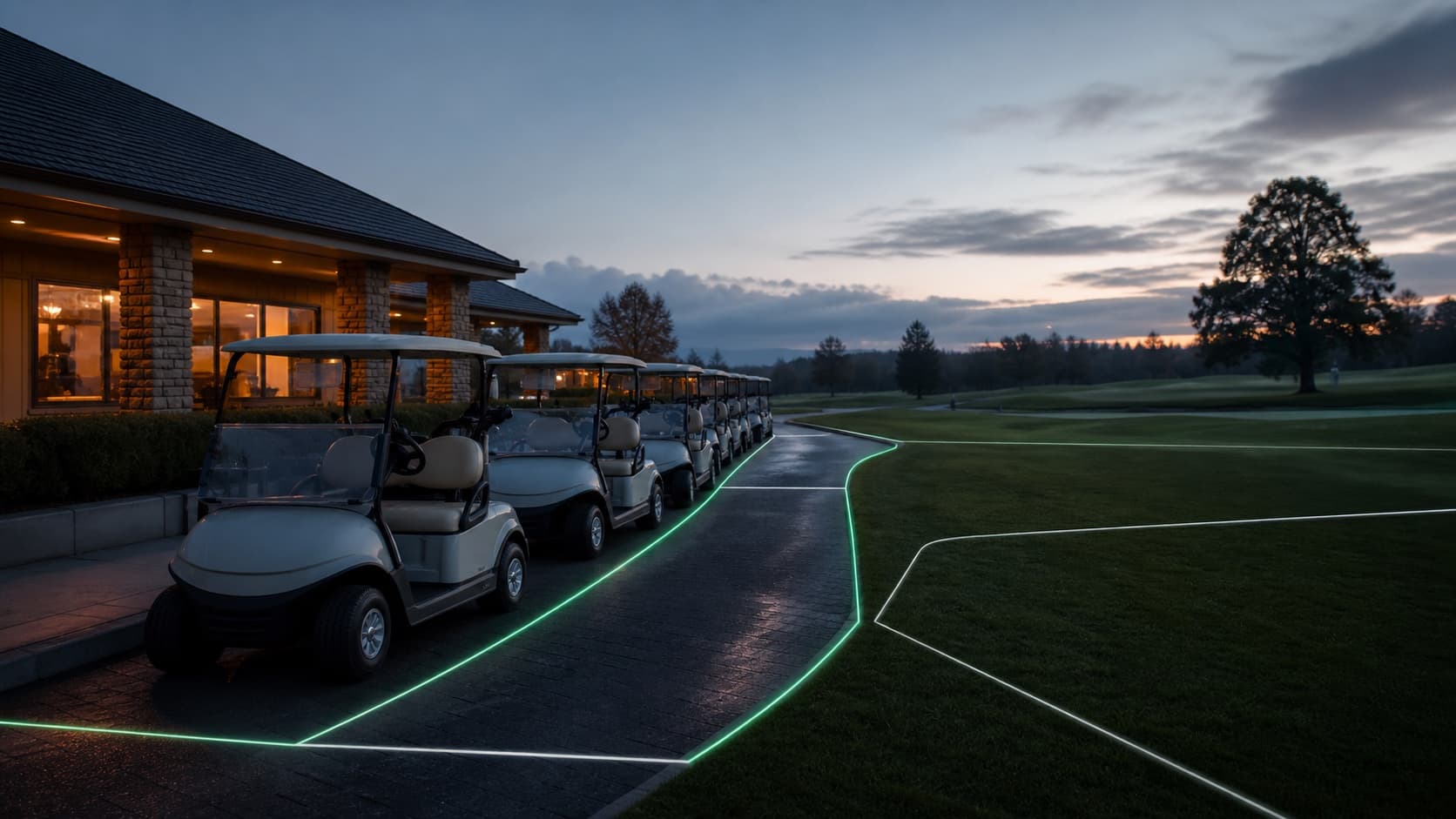
A missing cart is easy to notice once the fleet count is short. The harder question is what the course knew before the cart went missing.
Strong access control gives the course earlier signals. It helps staff understand which carts were authorized, which carts moved, and which exceptions deserve attention.
Weak control often looks normal
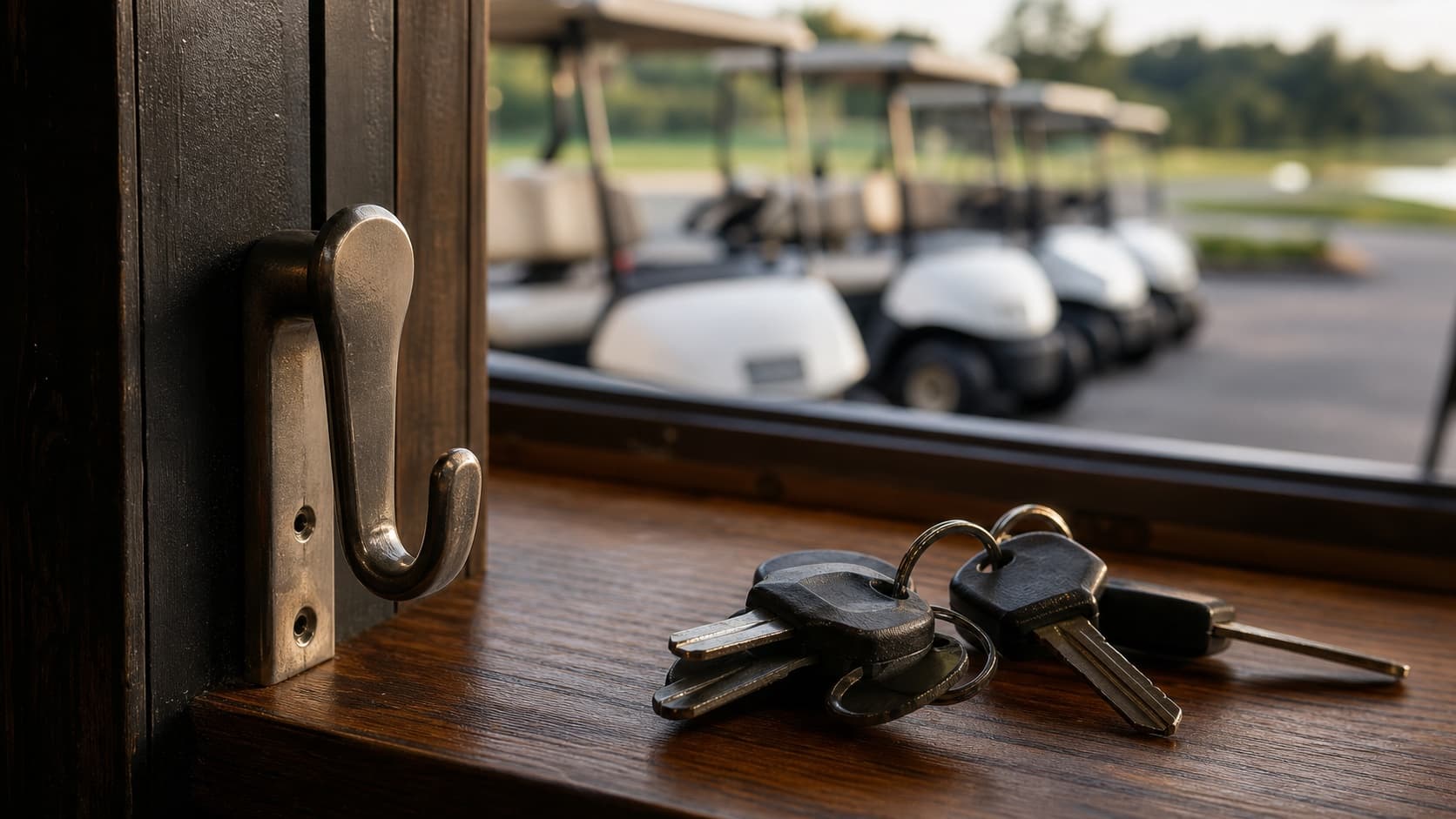
The old workflow can feel normal because it has been around for years: keys on hooks, carts in rows, staff making judgment calls. But familiar is not the same as controlled.
If access is reusable, anonymous, and hard to revoke, the course has a larger exposure surface than it needs.
Digital access can be scoped to a cart event instead of a broad key.
Operators get a cleaner trail when carts are unlocked.
Staff can spot gaps before the end-of-day count.
Open access increases the need for clean controls
AGIC reports that 73% of U.S. golf courses are open to the public. Public access is one of golf's strengths, but it also means operators serve many players who may not know the local cart process.
That is why the access model should be narrow by default. A golfer needs permission for one cart event, not broad reusable access that survives the round.
A better default for every shift
Golf One does not need staff to become security analysts. It gives them a better default: cart access starts with a tracked digital event.
That makes the unusual activity stand out. A cart without the right unlock trail is easier to question than a cart that disappeared into the usual morning noise.
- Reduce reliance on loose physical keys.
- Connect access to payment and golfer flow.
- Create a record staff can review after a dispute.
- Give managers a clearer view of late or abnormal cart activity.
Protect the fleet without slowing it down
The best access control is quiet. It should make the desired workflow easier, not add a security desk to the first tee.
Scan-to-unlock gives players a fast path while giving operators the control layer that the key hook never could.