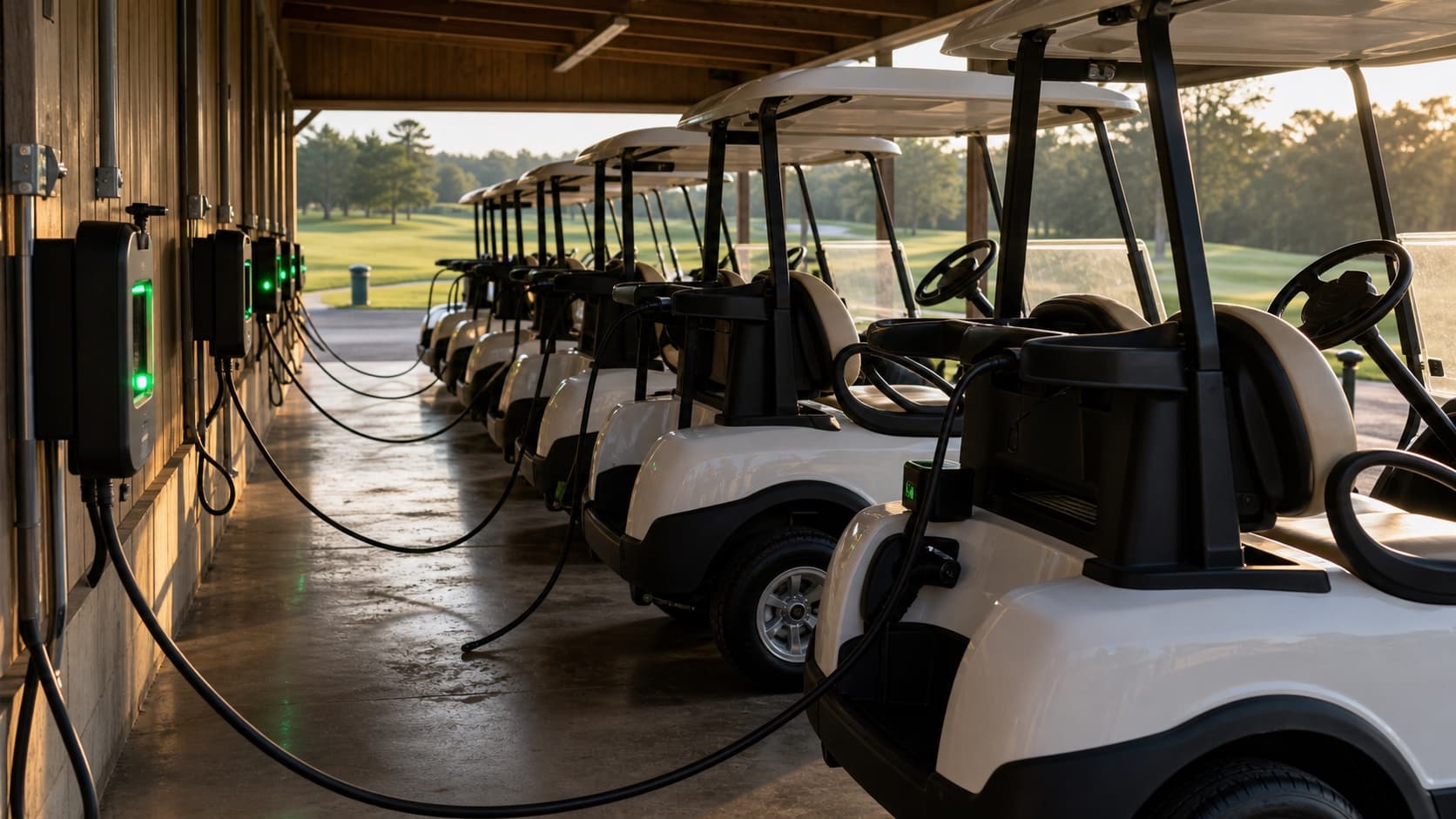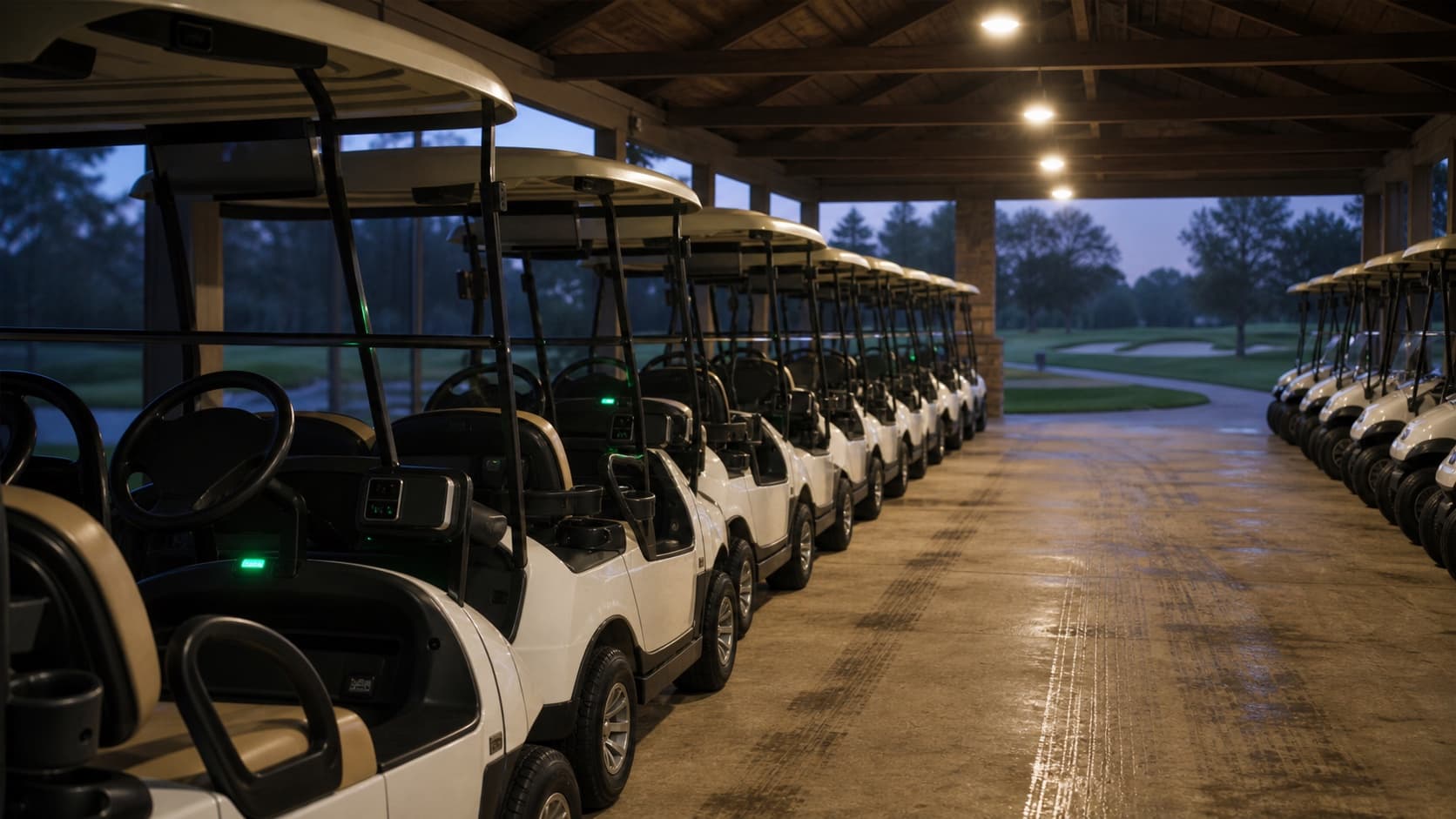

Peak season exposes every weak point in the cart workflow. The best time to find those weak points is before the first fully booked Saturday.
A short utilization audit helps operators see whether cart revenue, cart access, and cart inventory are moving together or drifting apart.
Start with one representative week
Pick a week with normal weather and normal play volume. Do not start with the strangest week of the year. The goal is to understand the baseline, not explain an outlier.
For each day, count carts available, carts used, cart fees collected, and exceptions staff had to handle manually.
- Total carts available each morning.
- Total paid cart fees.
- Total carts that left the barn.
- Keys replaced or not returned.
- Carts returned late, damaged, or out of expected location.
Use round volume as the benchmark
The right audit starts with the course's own round volume, but industry ranges help set expectations. GCSAA's survey demographics show 29% of respondents in the 17,001-25,000 round band, 26% in the 25,001-35,000 band, and 19% in the 35,001-50,000 band.
Those ranges are enough to make a simple point: if a facility has recurring cart demand, cart access should be counted with the same discipline as other revenue activity.
Match revenue to assets
The important comparison is not just revenue against rounds. It is paid cart fees against carts that physically moved. If the cart count is higher than the paid-fee count, the course has a process gap to inspect.
That gap may be innocent. It may be a comp, a staff override, a weather adjustment, or a mistake. But if the system cannot label it, the operator cannot manage it.
What the course believes it collected.
What actually left the barn.
Where comps, misses, and exceptions need a clearer label.
Turn findings into controls
The output of the audit should be a short list of controls, not a long report. Decide which exceptions require staff approval, which fees should be collected before unlock, and which carts need better tracking.
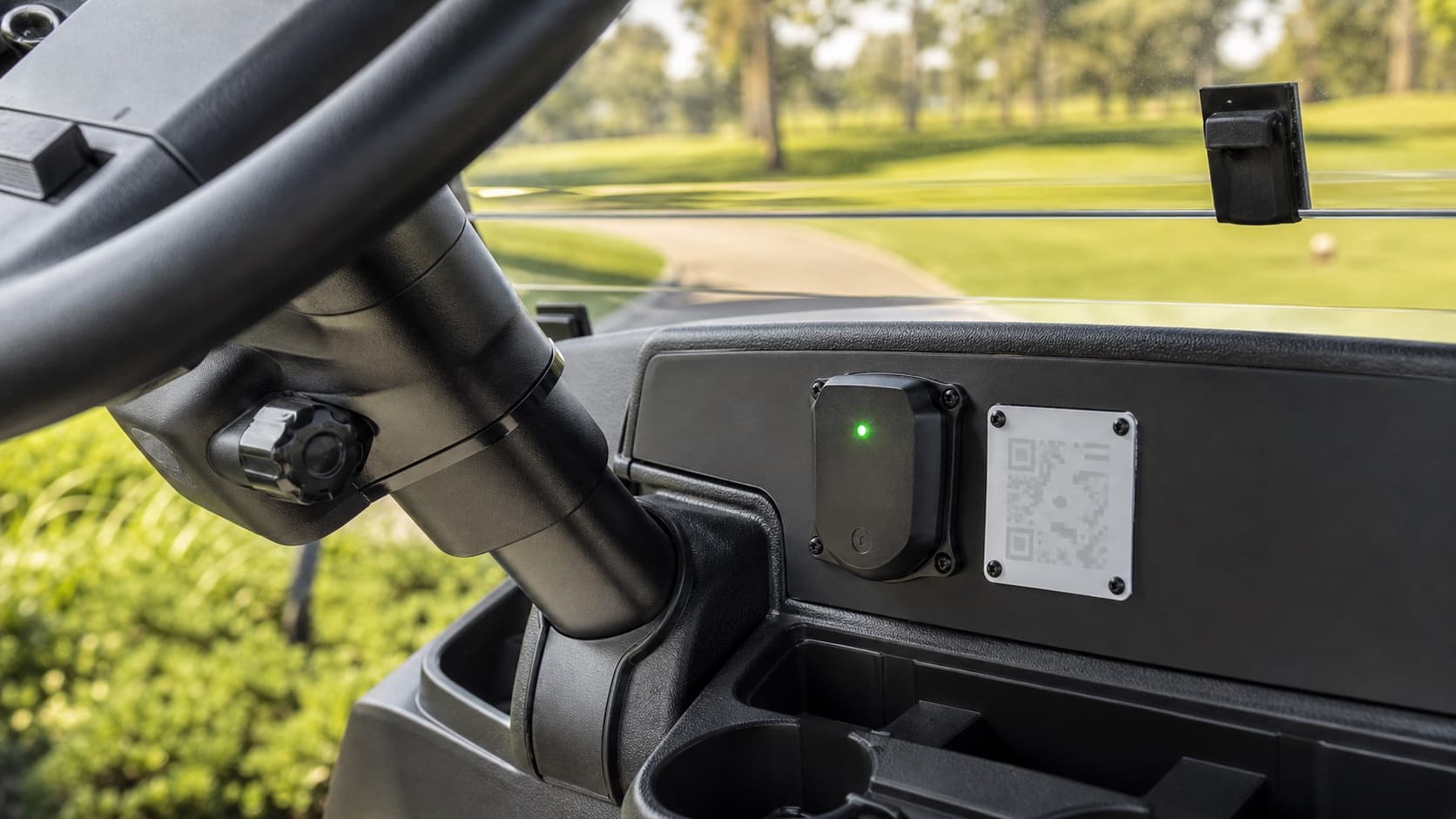
The right system should make the best workflow the fastest workflow: scan, pay, unlock, and record the event automatically.